
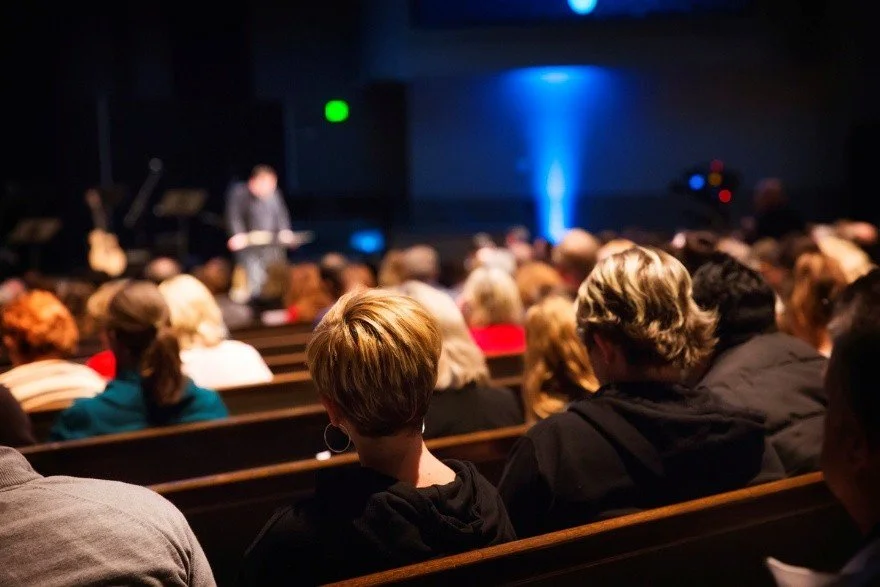
Church Attendance on the Rise in the United States
Median in‑person worship attendance in the United States has reached its highest level since before the COVID‑19 pandemic, according to a new report from the Hartford Institute for Religion Research (HIRR). The findings come from HIRR’s Exploring the Pandemic Impact on Congregations (EPIC) project, which released its latest analysis of worship attendance across U.S. faith communities. The report is based on a survey* of 7,453 congregations from a wide range of religious traditions, conducted between September and December 2025.
Researchers found that median in‑person worship attendance in 2025 reached 70 people per congregation. This represents an increase over the median of 65 attendees reported just before pandemic-related lockdowns in 2020, and a sharp rebound from the pandemic low of 45 attendees. According to the report, attendance has steadily increased each year since that low point.
The EPIC researchers described the 2025 figures as “the first positive gain in median attendance in 25 years,” though they cautioned against overinterpreting the results. While the recent increase is notable, the current median remains well below past highs. In 2000, the typical congregation reported a median attendance of 137 people. As a result, the report emphasizes that the recent growth should be understood within a much longer historical pattern of decline. Attendance levels also vary significantly by religious tradition. Catholic and Orthodox congregations reported the highest median attendance at approximately 200 people. Evangelical Protestant congregations reported a median of 75 attendees, while Mainline Protestant churches averaged 50. Other religious traditions reported a median attendance of 22.
“What we’re seeing is not a revival — it’s a recalibration,” said Allison Norton, co‑investigator on the EPIC project. She noted congregations have endured an extended period of disruption and change, and many are now emerging with greater clarity about their identity and mission. According to Norton, that renewed focus is beginning to appear in attendance data in encouraging ways.
Despite ongoing discussions about the growth of religiously unaffiliated Americans, other recent research suggests that the decline in religious practice may be slowing. In January, Lifeway Research cited Pew Research Center data indicating that younger adults show a modest increase in religious engagement compared to slightly older peers, though they remain less religiously active than older generations. “The findings don’t give a simple picture of religion in America,” said Lifeway Research senior writer Aaron Earls. “There are reasons for optimism and concern.”
Biblical Connection: What amazing news to hear! The decline of Christianity in America that was so prevalent over the past five years, especially through the Covid pandemic, has finally seemed to stabilize. While the nation certainly is not in the same place that it was spiritually thirty years ago, any positive movement is a good thing. Churches need to jump on this positive trend with a new emphasis on evangelism and outreach. People are looking for answers in a broken world. Many of them tried to find these answers through science and government only to see them not having true answers and fail miserably. It is time for the American Church to rise once again and reach out to a broken world. If the church fails to capitalize on this momentum and this opportunity, it may not receive it again and the United States might go down a similar path to Europe. May that not be the case. May we rise up and reach out to our neighbors with the Gospel and the love of Jesus.
PRAY: Pray this increase in church attendance won’t just be a blip but will go beyond renewal and be the start of spiritual revival that will spread globally.
*This survey carries a margin of error of ±3 percentage points at a 95% confidence level.